How Do You Get Back After Bungee Jumping?
How jumpers are recovered at Queenstown's bungy sites: lowered to a boat at Kawarau Bridge, lifted back to the platform at Nevis, and the bus ride back to town.
The question sounds small until you are standing on a platform 43 m or 134 m above a river with a cord tied to your ankles. The freefall takes seconds; the operator's figure for the Nevis plunge is 8.5 seconds. What follows the jump is a designed recovery process, and in Queenstown it works differently at each of the operator's sites. This page walks through exactly what the operator, AJ Hackett Bungy NZ, says happens after the cord catches you: how you get down or up, what happens on the platform, and how you get back to town.
After the cord stops your fall, the crew takes over: at the Kawarau Bridge you are lowered into a boat waiting in the river below, and at Nevis and the Ledge you are lifted back up to the jumping platform you left. Both methods are crew-operated, and neither requires anything from you beyond relaxing while the equipment does its job. The operator's FAQ describes the boat recovery at Kawarau and the platform lift at the other two sites.
That is the whole answer in one line, but the details change how the day feels, so they are worth unpacking. A boat recovery means you end up in the Kawarau River canyon with the bridge above you, and the experience finishes at water level. A platform lift means you come back up to where you started, which at Nevis means returning to the cable-car pod suspended over the canyon, and at the Ledge means coming back onto the platform at the top of the Skyline Gondola.
The distinction matters for planning, too. A boat recovery means the site needs river access and a crew on the water; a platform lift means the site can hang over terrain that has no easy ground below it. That is part of why the two Queenstown families of jumps, Kawarau at 43 m and Nevis at 134 m, are built and run so differently, from transport to weight limits.
The rest of this page goes site by site, then covers the cord and harness mechanics, the platform wind-down, and the trip back to Queenstown.
How Recovery Works At The Kawarau Bridge
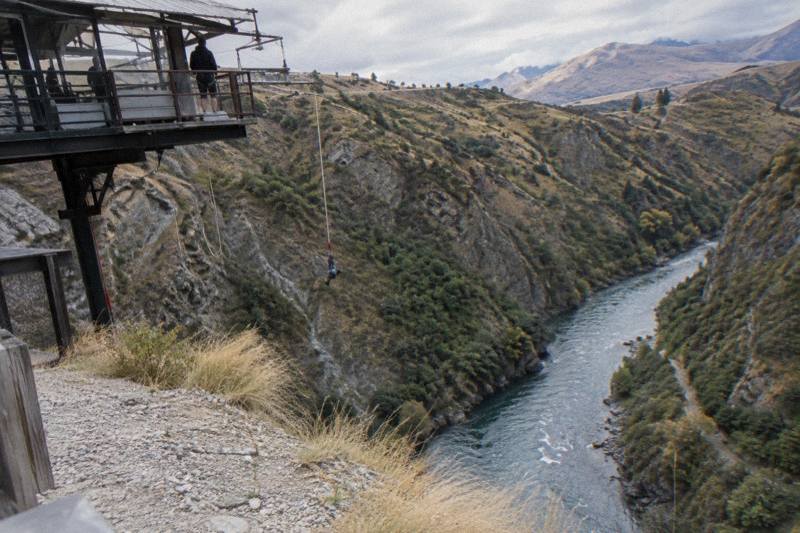
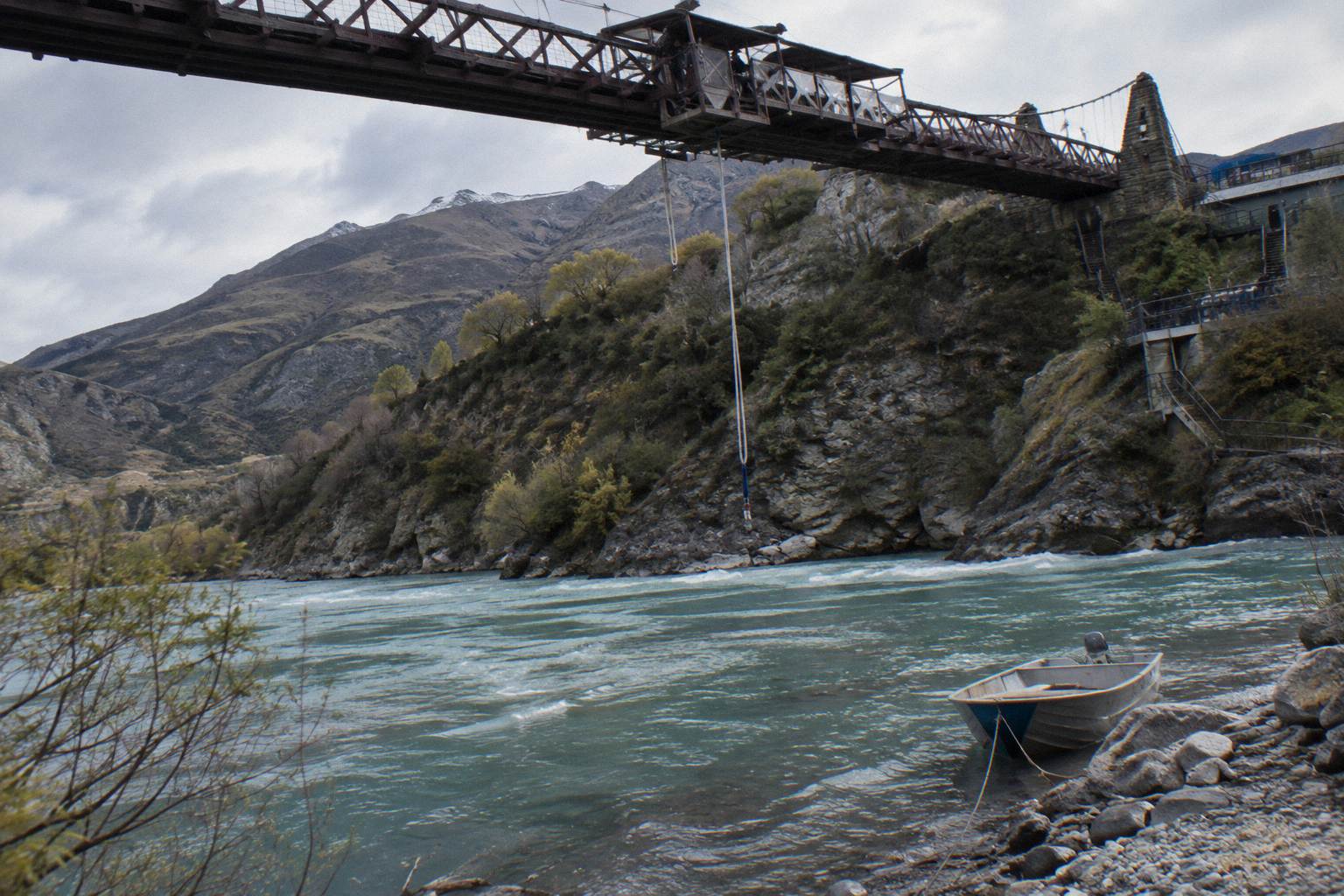
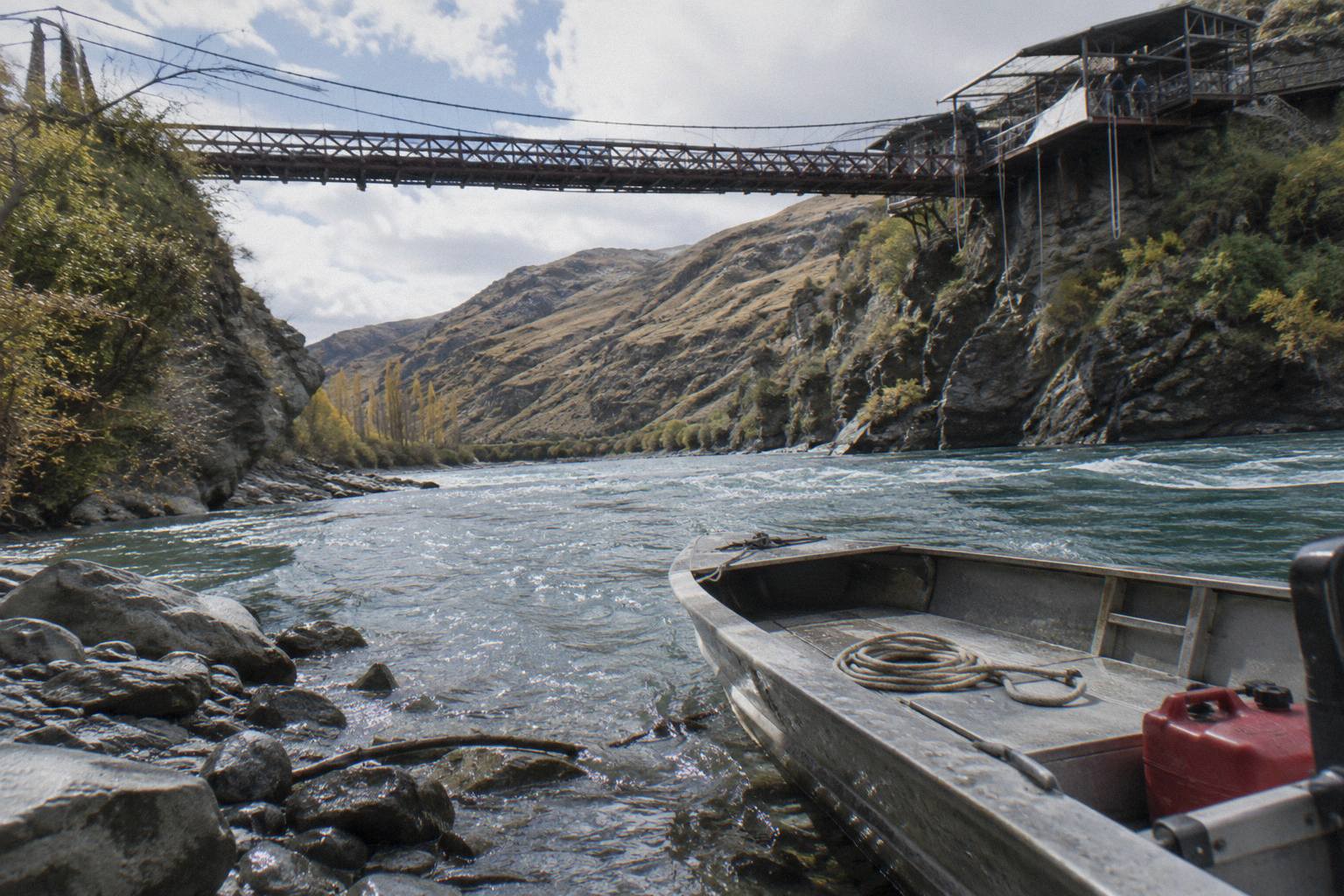
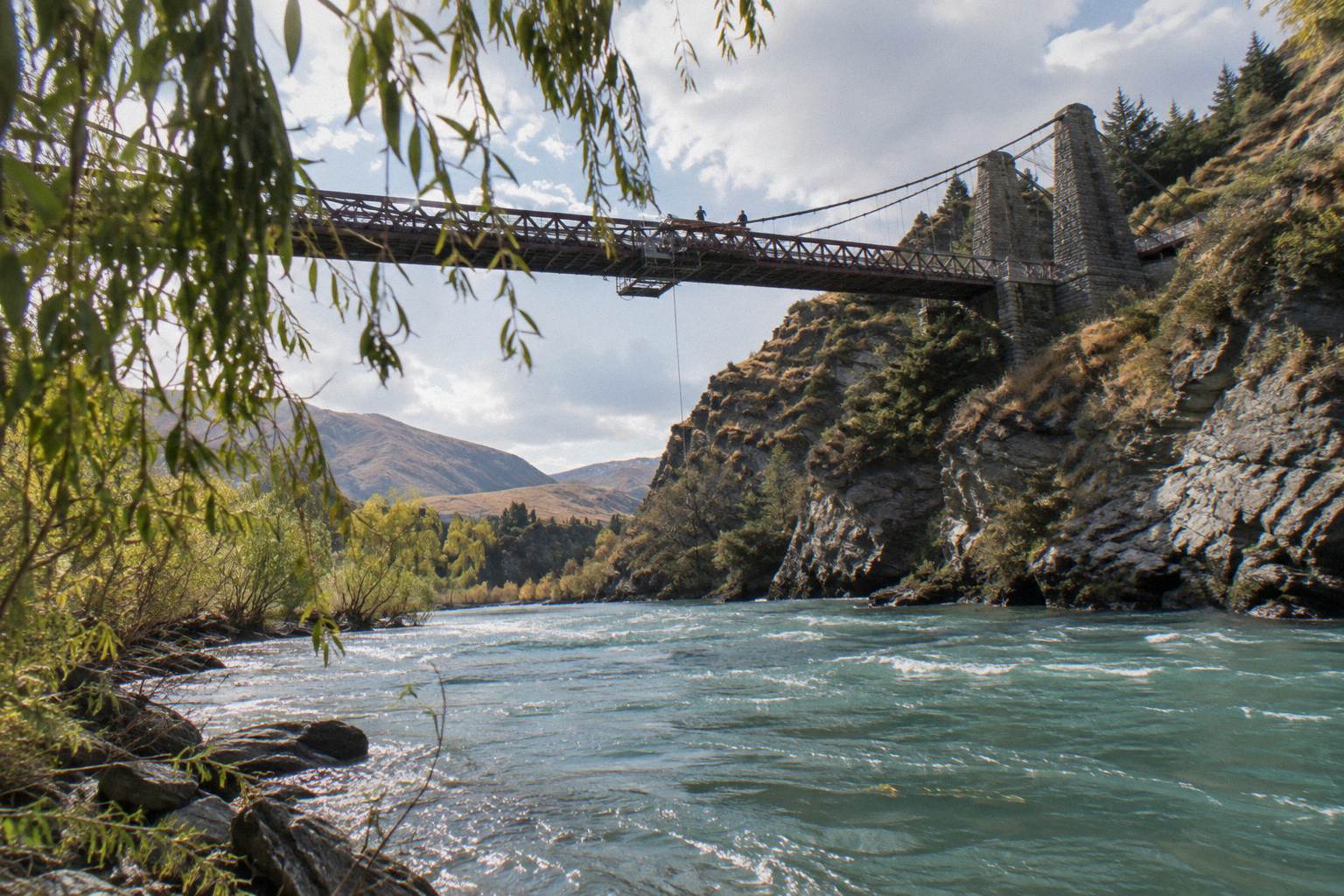
Kawarau Bridge jumpers are lowered by the cord into a boat waiting in the river below, then brought back to the bank. The operator's FAQ is explicit: Kawarau is the site where you are lowered to a boat. The jump itself is 43 m, or 141 ft, from the bridge the operator brands as the World Home of Bungy, and the boat sits in the Kawarau River gorge underneath it.
The sequence, as the operator describes it, runs from the end of the jump to the river. Once the cord has done its work and the bouncing settles, the crew lowers you the remaining distance toward the water. The boat crew receives you, and from there you are ferried to the bank. There is no climb, no long walk, and nothing left for you to do while dangling. Recovery at this site is a handover between the platform crew above and the boat crew below.
One detail makes this recovery method famous, though it is not guaranteed. Kawarau is the site of the water touch option, where the lowering can dip you into the river. The operator is careful with this wording: the water touch depends on river level and crew discretion, so it is an option rather than a promise. Booking it does not lock it in, and the crew on the day makes the call.
The Kawarau site suits this method well. The bridge sits over a river gorge with river access, which is exactly what a boat recovery needs, and the site is the operator's original: the first commercial bungy opened at this bridge in November 1988, according to the operator's own history, at NZD 75 a jump at the time. The operator calls the bridge "recognised as the birth of adventure tourism in New Zealand", a claim that belongs to the company, and the 43 m / 141 ft height figures are the operator's own. The operator's Kawarau Bridge Bungy page carries the site's product details.
The bridge also offers a tandem option, and recovery works the same way for two jumpers as for one: both are lowered together into the boat. Tandem limits sit in the age and weight block, with a combined maximum of 235 kg and a weight difference of at most 30 kg between the two jumpers.
If the boat recovery appeals, the 43 m original is the jump that comes with it, from NZD 320 adult at the operator's price.
Spectators watch this one for free, which suits the boat finale: from the viewing areas at the Kawarau Bungy Centre you can see both the jump and the pickup.
How Recovery Works At The Nevis
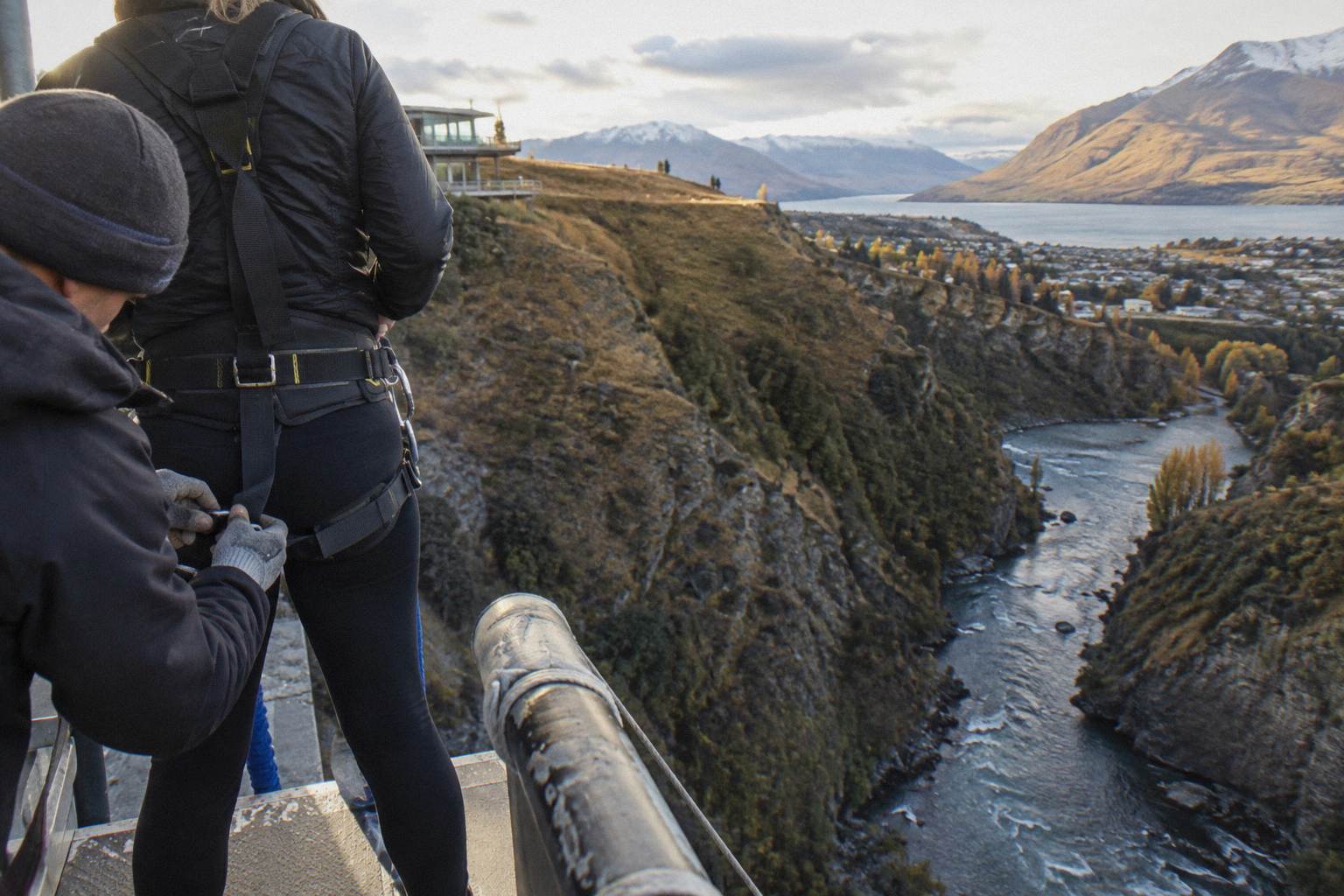
At the Nevis you are lifted back up to the platform you jumped from, which is a cable-car pod suspended over a high-country canyon. The operator's FAQ groups Nevis with the Ledge as the lift-recovery sites: no boat, no bank, you come back up to where you started. The jump is 134 m, or 439 ft, which the operator calls the highest in New Zealand, and the platform is reachable only by the operator's 4WD bus.
“Hands down one of the most incredible experiences of my life! Everything from the scenery, the great vibes from the crew, and the jump itself was simply amazing. 10/10 recommend!!”
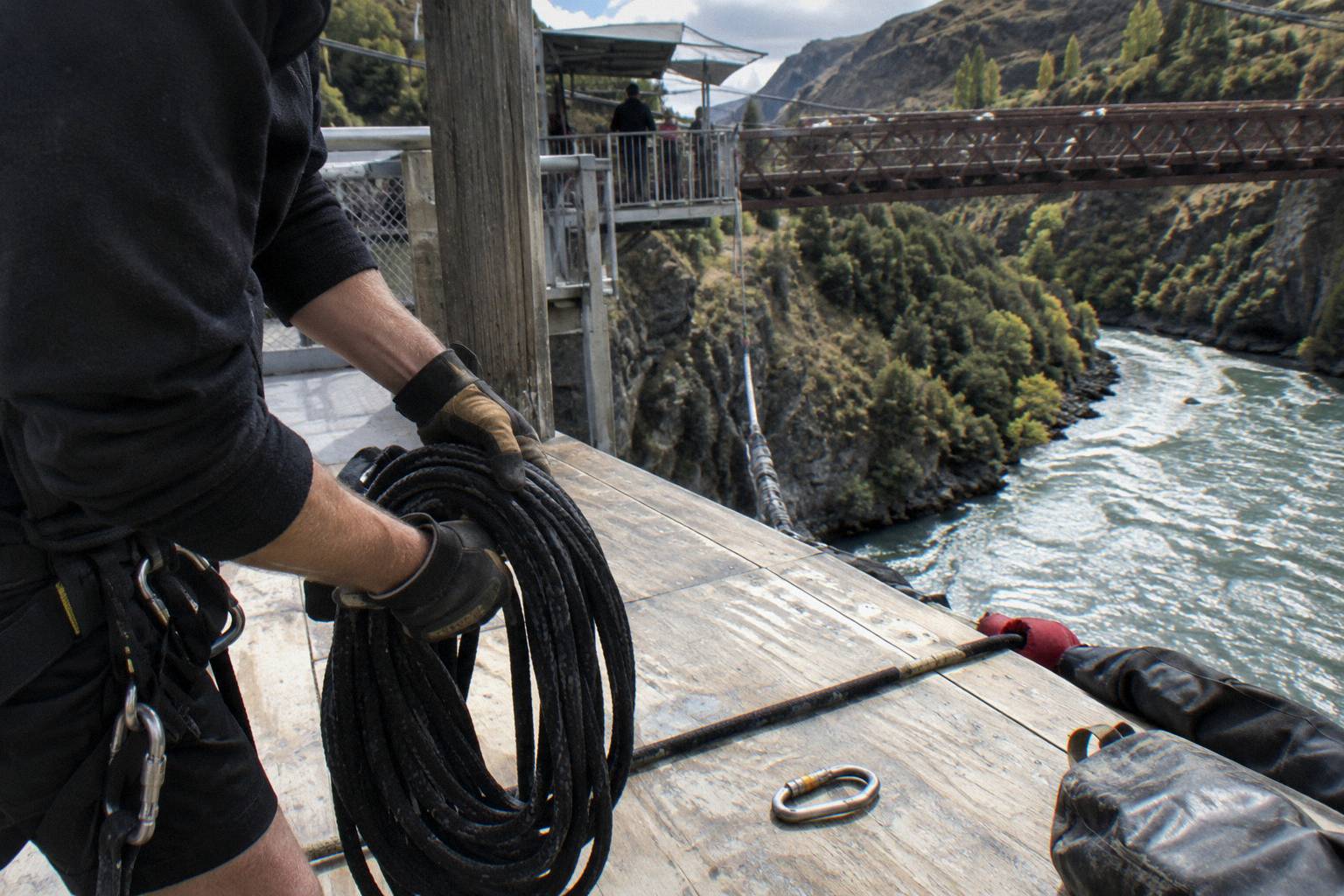
The mechanics follow from the geography. The Nevis Bungy is made from a cable-car pod over the canyon, in the operator's own wording, and there is no river-level access for a boat and no ground station under the pod. Once the cord settles, the crew winches you back up to the pod. You finish where you began, standing on the same platform with the crew, rather than being handed down to a second team below.
The differences from Kawarau ripple through the whole day. The Nevis trip runs about 3.5 to 4 hours in total, because the site is on private land with no self-drive access: the return 4WD bus ride, 45 minutes each way, is included in the price. The age and weight limits are higher too, 13 and up, and 45 to 127 kg, and the solo jump price is from NZD 395 at the operator's price, with no lower child price for this product. The operator's Nevis page covers the site and its transport.
Spectating at Nevis works differently as well, because there is no public vantage point: a spectator spot is NZD 50 for adults and free for under 10s, and the operator also runs a spectator-only trip called the Nevis Explorer at NZD 50. If someone in your group wants to see the lift recovery without jumping, those are the options.
The Nevis swing and catapult share the pod and the same lift-back recovery, and the combo products bundle them with the bungy. More on those further down.
How The Cord And Harness Bring You Back Up
The cord and harness bring you back up because recovery is the second half of the equipment's job, not a rescue: the bungee cord, the harness and the lowering or winching line are all designed so the crew can move you from hanging in the air to solid ground or platform in a controlled way.
At both lift sites the practical sequence is that the crew takes your weight on a separate line and raises you. You do not climb, and you are not expected to pull yourself up. The equipment attached to you, the harness and the cord, stays in place until the crew releases it on the platform or in the boat. For anyone who wants the fuller picture of what the cord does during the fall and the catch, the companion page on how the bungy cord and harness work goes through it in detail.
The table below puts the three sites' recovery methods side by side. The Ledge, the operator's third Queenstown site at the top of the Skyline Gondola, is included for completeness: it uses the same lift-back-to-platform recovery as Nevis, per the operator, and is reopening for summer 26/27.
| Site | Jump Height (Operator Figures) | Recovery Method | Where You Finish |
|---|---|---|---|
| Kawarau Bridge Bungy | 43 m / 141 ft | Lowered to a boat | River level, then the bank |
| Nevis Bungy | 134 m / 439 ft | Lifted back to the platform | The cable-car pod over the canyon |
| The Ledge Bungy | 47 m / 154 ft off the platform | Lifted back to the platform | Top of the Skyline Gondola |
One recovery detail that surprises first-timers is how little of it is theirs to do. The operator's day-of rules are about what not to bring: no drugs or alcohol, and no glasses, with prescription safety goggles available, which the operator's safety page says are free of charge. The crew handles the rest.
What Happens Once You Are Back On The Platform
Once the crew has you back on solid footing, the jump converts into paperwork and souvenirs. The operator includes photos and video of the jump with the price of the Kawarau and Nevis activities, with what it calls instant delivery to your device, plus an activity t-shirt when you book direct. Then you unharness, collect your things, and rejoin the site.
The photo and video package is worth flagging because many jumpers assume it is an upsell. The operator's activity pages state it is included: photos and video with delivery to your device, and a t-shirt with direct bookings. The Zipride, the operator's 130 m / 426 ft zipline at Kawarau, is the exception on its own page, which mentions photos only.
Back on the platform there is also the unharnessing and the handback of anything you stored. Under-18 jumpers need adult consent at check-in, and under 14s need an adult aged 18 or over on site at the site, an adult who does not need to take part, so families usually reunite right here. The details of the media package are covered fully in the guide to bungy photos and video in Queenstown.
For jumpers who want more than one ride out of the day, the combos pick up exactly here: you are back on the platform, and the swing or catapult is waiting. The Kawarau Bungy & Swing Combo pairs the 43 m bridge jump with the 43 m Kawarau swing, from NZD 460 at the operator's price, for ages 10 and up and 35 to 150 kg.
At Nevis the combo logic is the same but bigger: the Nevis Bungy & Swing Combo is from NZD 620, which the operator says saves NZD 100 against booking the two separately, and the Thrillogy adds the catapult for a three-activity day from NZD 805, a NZD 210 saving per the operator.
Getting Back To Queenstown After Your Jump
The trip home is the last leg of the recovery, and the two sites handle it differently. Kawarau is self-drive friendly, about 25 minutes and 23 km from Queenstown on SH6 in the Gibbston Valley, with free parking, so you drive yourself back when you are ready; Nevis has no self-drive at all, and the return 4WD bus is included in the price. Both sites also tie into the free Bungy Bus from central Queenstown.
The Bungy Bus deserves its own paragraph because it is free, with limited seats, and it leaves from the Queenstown Bungy Centre at the corner of Shotover and Camp Streets, in The Station building. You check in 30 minutes before departure. For Kawarau trips the operator says to budget 2.5 hours by bus versus 1.5 hours self-drive, which includes the jump and recovery themselves; for Nevis the whole trip is about 3.5 to 4 hours with the 45-minute ride each way, and a pickup at Kawarau can be requested if you would rather start from the valley.
| Trip | Transport | Time To Budget | Getting Home |
|---|---|---|---|
| Kawarau self-drive | Own car, free parking at 1693 Gibbston Highway | 1.5 hours total | Drive back, about 25 minutes |
| Kawarau by Bungy Bus | Free bus, limited seats, from The Station | 2.5 hours total | Return bus |
| Nevis Bungy | 4WD Bungy Bus only, return included | About 3.5 to 4 hours | Return bus, 45 minutes each way |
Kawarau's hours frame the day: daily including public holidays, closed Christmas Day, 8:30am to 5:00pm from October to April and 9:00am to 4:30pm from May to September, with the last jump 30 minutes before closing and check-in 15 minutes before your jump. Nevis departure times vary by day and it operates year round. The operator's FAQ carries the current schedules and the bus details.
Timing your booking around these logistics is its own topic: in summer the operator suggests booking Nevis four to six weeks ahead, with the peak from 15 December to 15 January and the busiest days 30 December to 2 January. The page on the best time to bungy in Queenstown works through the seasons.
Common Mistakes When Planning Around The Recovery
The most common planning errors are treating the recovery as an afterthought: assuming there is self-drive at Nevis, budgeting too little time for the whole trip, and expecting the water touch at Kawarau as a certainty. Each of these comes from the operator's own rules, and each is avoidable with one decision made before booking.
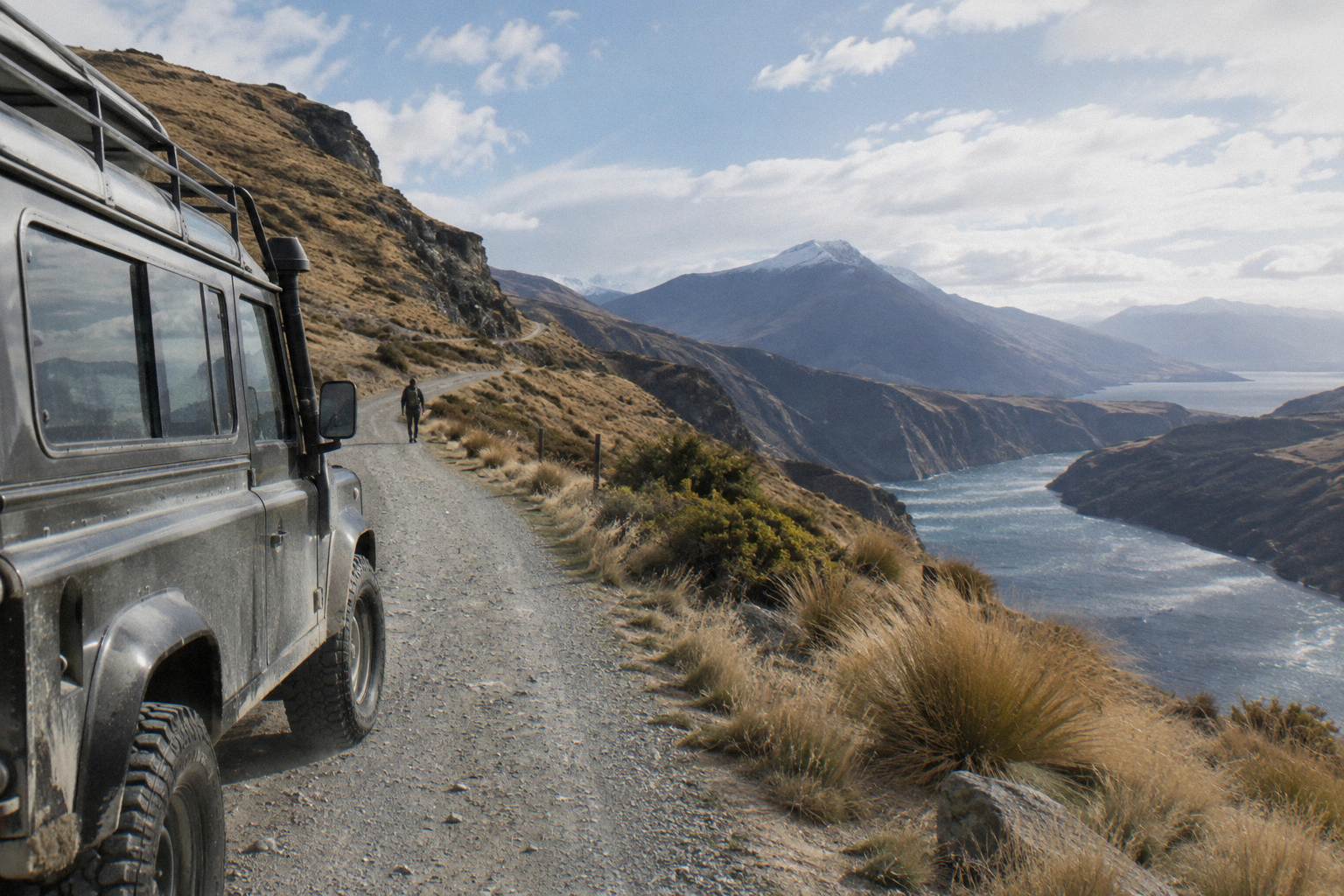
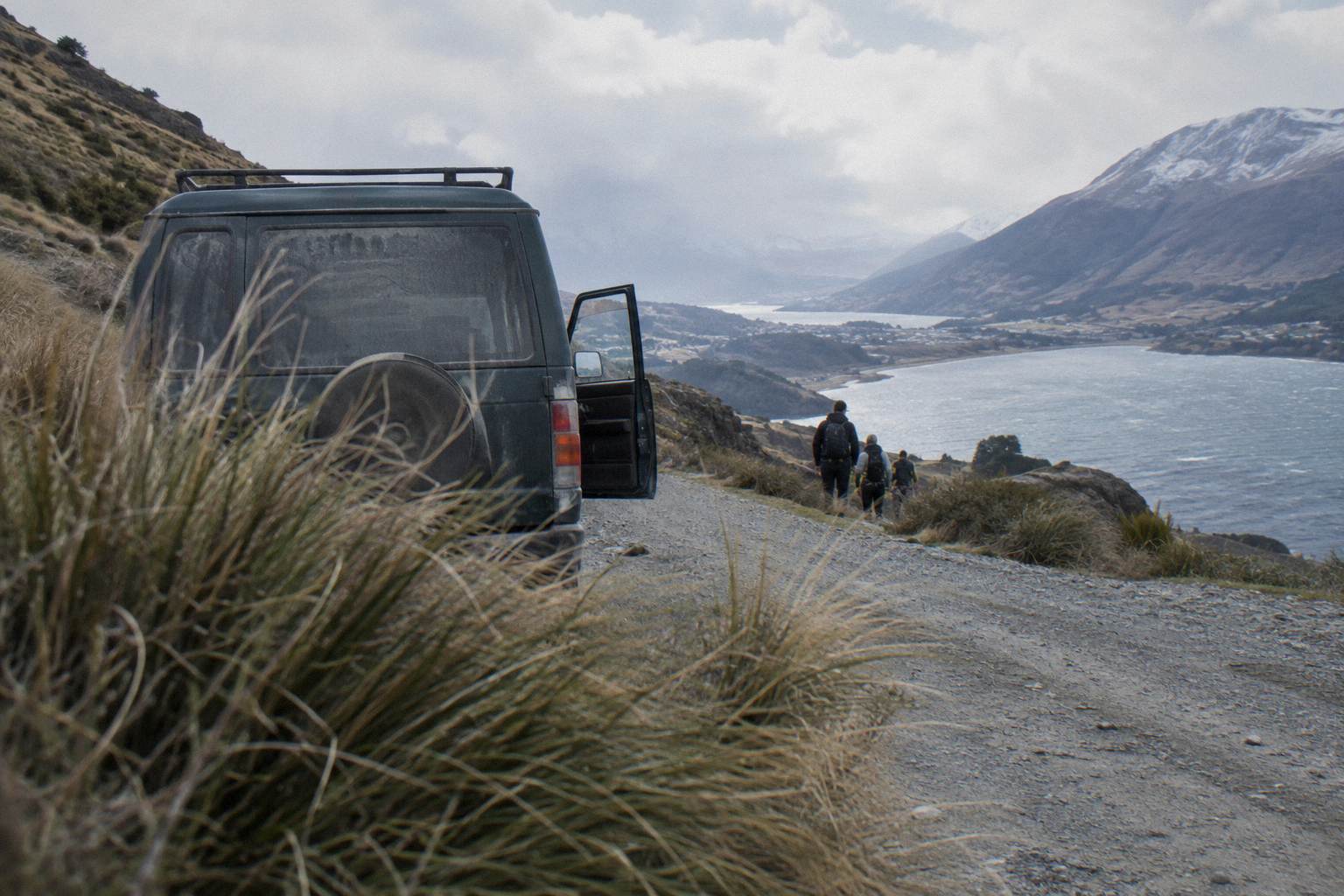
First, the Nevis self-drive assumption. The site is on private land, and the only way in and out is the operator's 4WD bus, return included in the price. Turning up at the canyon independently is not an option, and there is no parking question to answer because there is no driving question.
Second, time budgeting. A Nevis bungy is not a 20-minute activity; it is about 3.5 to 4 hours door to door from Queenstown, and the Kawarau trip is 1.5 hours self-drive or 2.5 hours by bus. Jumpers who sandwich a jump between two tightly booked commitments are the ones who feel rushed, and the cancellation rules make that expensive: cancelling less than 24 hours out, a no-show, or deciding not to jump once there is non-refundable, while changes more than 24 hours ahead are fully refundable minus the 1.99% card fee.
Third, the water touch. It is an option at Kawarau, not a guarantee, and the operator says it depends on river level and crew discretion. Book it hoping for it, not expecting it. Related to that, the solo weight maximum at Kawarau drops to 130 kg when the river is high, another river-level consequence the crew assesses on the day.
Fourth, glasses and goggles. Glasses cannot be worn on any of the jumps, and prescription safety goggles are available, which the operator's safety page says are free of charge. Wearers who arrive without contacts or a plan discover this at check-in, so it is worth settling before the day. For the broader picture on what else to bring, the what to wear bungy jumping guide covers clothing and accessories.
Fifth, the Ledge. It appears on the operator's site with a waitlist, reopening for summer 26/27 per the operator, and its recovery, lift back to the platform, is described here for completeness only. It is not bookable through these pages, and no reopening date is given; check the operator's own page for status.
Common Questions About Getting Back After Bungee Jumping
How Do You Get Back After Bungee Jumping?
It depends on the site. At the Kawarau Bridge the crew lowers you into a boat in the river and you finish at the bank; at Nevis and the Ledge you are lifted back up to the platform you jumped from. The operator's FAQ states both methods.
Do You Get Pulled Back Up To The Platform On Every Jump?
No. Only Nevis and the Ledge use the platform lift. Kawarau Bridge jumpers are lowered to a boat, which is why that jump finishes at river level.
Do You Have To Climb Back Up Yourself?
No. The crew takes your weight and does the lowering or lifting; you are not asked to climb or pull yourself up at any Queenstown site.
How Long Does The Whole Thing Take?
The recovery itself has no stated timings. The full trips do: about 3.5 to 4 hours for Nevis including the 45-minute bus ride each way, and 1.5 hours self-drive or 2.5 hours by bus for Kawarau.
Can You Touch The Water At The End?
At Kawarau the water touch is an option, not a guarantee: the operator says it depends on river level and crew discretion.
Do You Get Photos Of The Jump?
Yes, at Kawarau and Nevis the price includes photos and video with delivery to your device, plus an activity t-shirt when booking direct, per the operator.