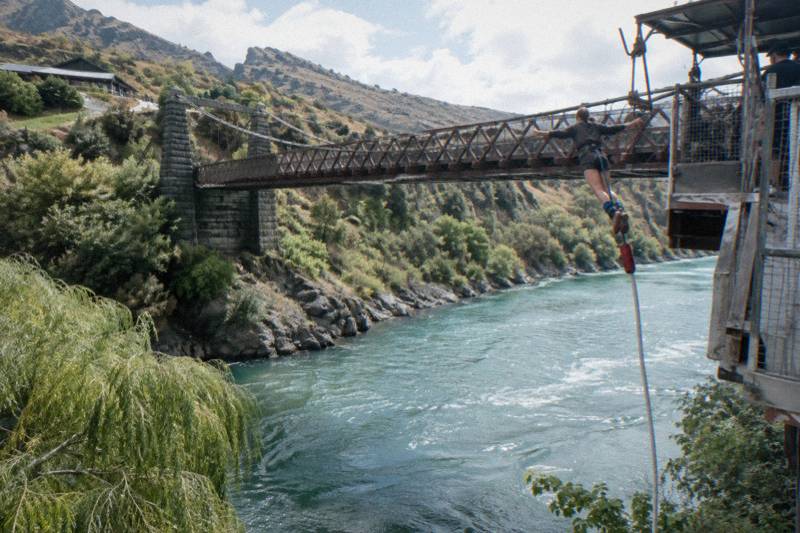
Is Bungee Jumping Bad For Your Brain?
What the Queenstown bungy operator actually says about brains, concussion, epilepsy and neurological health, and what to do before you book a jump.
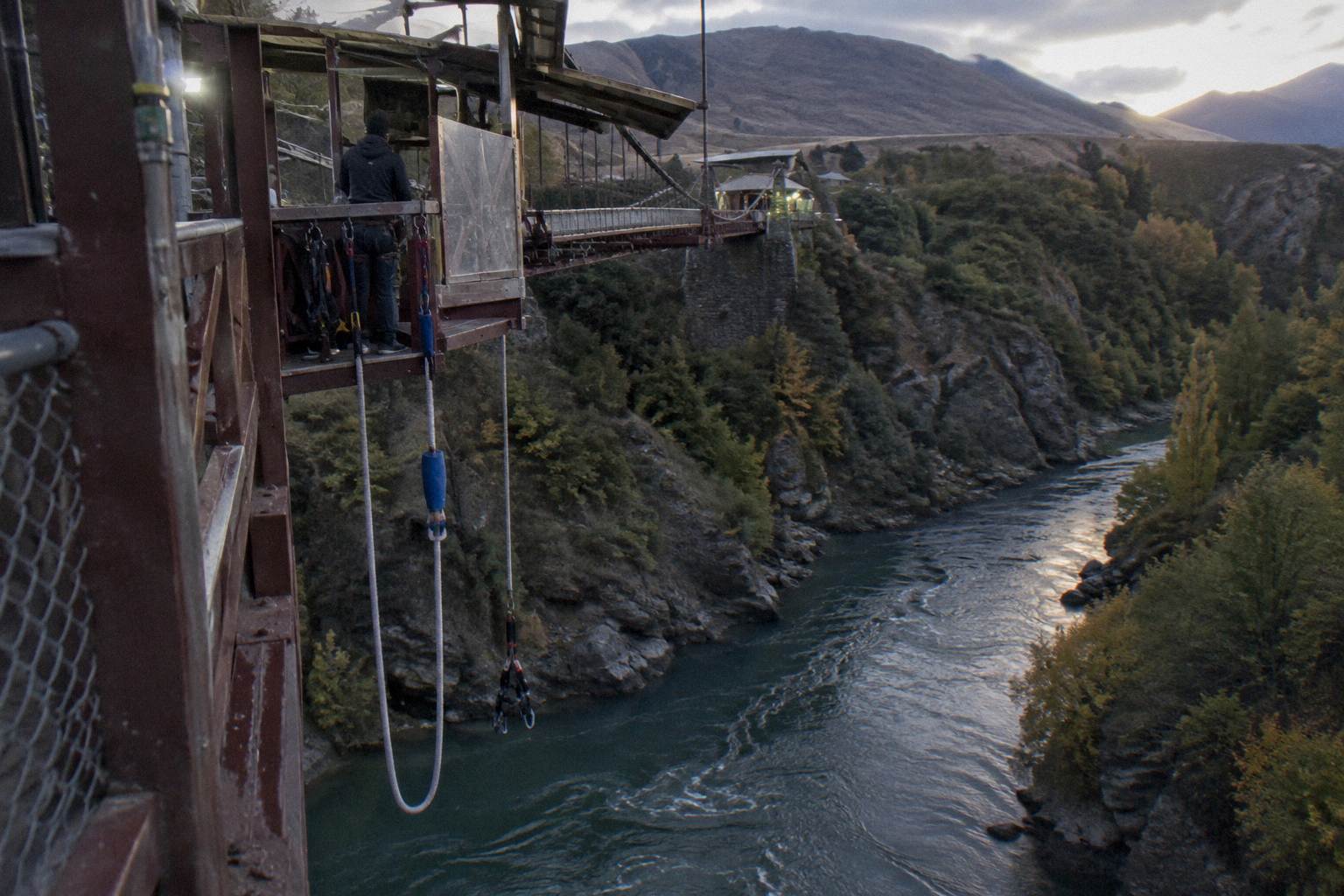
The operator does not state whether a jump harms a healthy brain. What AJ Hackett Bungy NZ does state is specific: neurological disorders go on the "tell the crew" list, recent concussion requires a doctor's certificate, and photosensitive epilepsy means you cannot take part. Beyond that, one instruction covers it, check with your doctor and tell the crew when you book.
That is a frustrating answer if you came looking for a verdict. The operator AJ Hackett Bungy NZ publishes no medical studies, no injury statistics and no physiology on its official pages. It does publish a code of practice it says was instigated in 1990 and is now an industry standard for Australia and New Zealand, per the operator's safety page, but that page is about procedures, not about what a jump does to a brain.
What the pages do give you is unusually practical: a screening list you can read before you book, a hard stop for two conditions, a certificate rule for three more, and a phone number, 0800 286 4958, if your situation is not on any list. Those rules are the real substance of this article.
The short version of the rest of this page: nobody writing here is a doctor, the operator is not your doctor either, and the gap between those two facts is exactly where the operator's "tell the crew" list sits. The list exists so the crew can make a call with real information on the day, not so you can self-diagnose your way past it.
What The Operator Actually Says About Neurological Health
The operator's health rules mention the brain and nervous system in exactly three places. Neurological disorders appear on the disclosure list, meaning the crew decides with your information. Recent concussion appears on the certificate list, meaning a doctor must sign you off first. Photosensitive epilepsy appears on the exclusion list, meaning no participation. The rules are not rated by jump height, so a 43 m Kawarau jump and a 134 m Nevis jump carry the same screening.
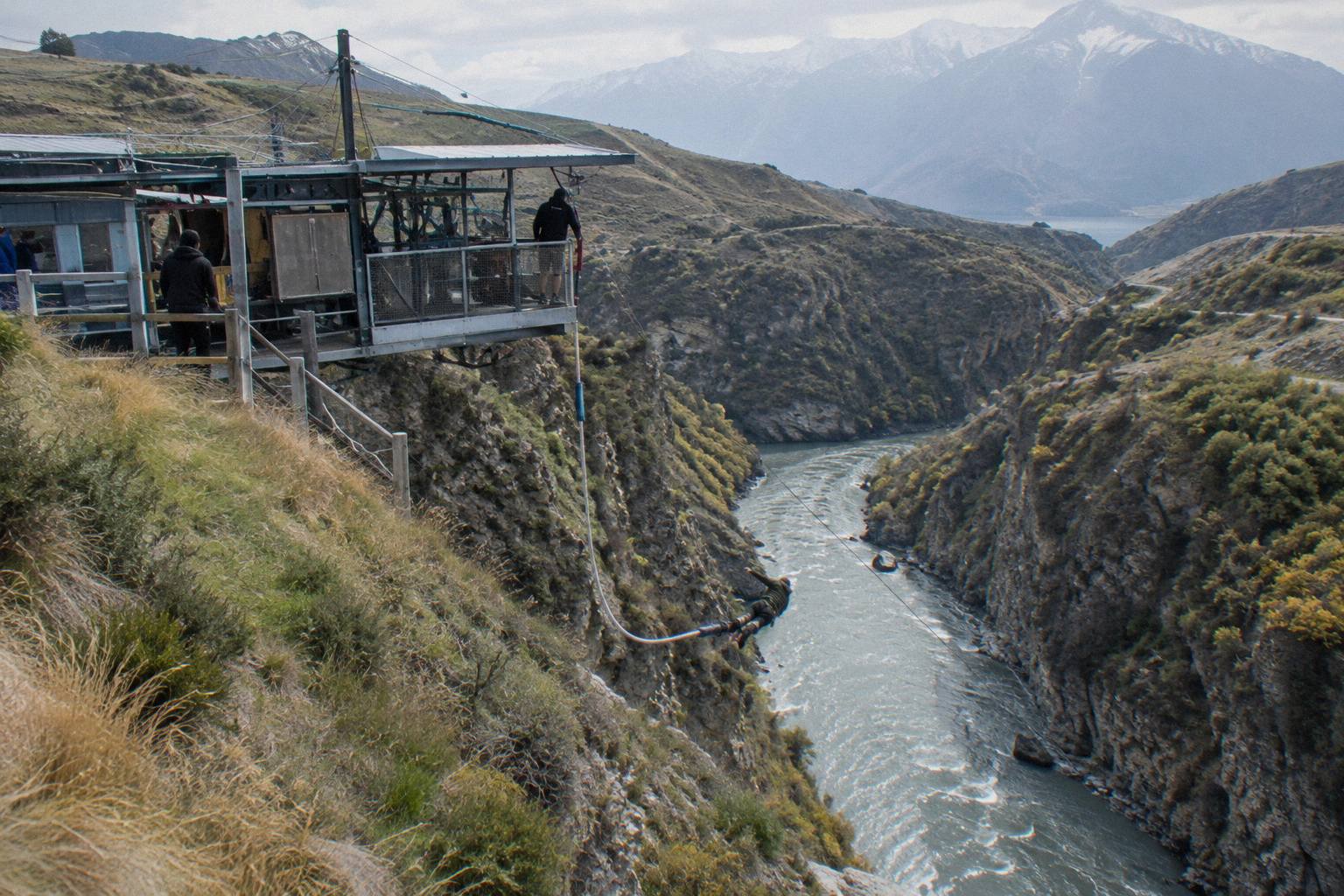
That last point surprises people. There are two bookable bungy families in Queenstown, the 43m Bungy, World's First at Kawarau Bridge and the 134m Bungy, New Zealand's Biggest at Nevis, and their age limits, weights and prices differ. Their health list does not. The same disclosure rules apply whichever you book, per the operator's FAQ.
Here is the full disclosure list as the operator states it. You tell the crew about high or low blood pressure, heart conditions, epilepsy, high myopia, broken or fractured bones, dislocations, fragile skin, neurological disorders, diabetes, asthma, prosthetics, panic or anxiety attacks, and recent sprains or muscular injuries.
| Rule type | Conditions | What it means for booking |
|---|---|---|
| Tell the crew | Neurological disorders, epilepsy, heart conditions, high or low blood pressure, high myopia, diabetes, asthma | Disclose when you book; the crew assesses on the day |
| Doctor's certificate | Osteoporosis, scoliosis, recent concussion | A doctor must sign you off before you jump |
| Cannot take part | Pregnancy, photosensitive epilepsy | No participation in bungy, swing or catapult |
Notice what is missing. There is no general question on the form called "is your brain fine", no question about headaches, memory, mood or past scans. The operator screens for named conditions and leaves everything else to a conversation. If you have a neurological history that is not a disorder on the list, the only correct move is to raise it anyway, by phone on 0800 286 4958 or at booking, and let the operator respond.
A related question people ask alongside this one is covered in the guide on whether bungee jumping is safe overall, which looks at the operator's own safety claims and procedures rather than any one condition.
Recent Concussion And The Doctor's Certificate Rule
If you have had a recent concussion, the operator's rule is that you need a doctor's certificate before you can jump. There is no stated time window, no "wait two weeks" figure and no severity threshold anywhere in the operator's pages, so the word "recent" is interpreted by your doctor, not by you and not by the crew. Getting the certificate sorted before you travel matters because the crew cannot wave the rule aside on the day.
“Hands down one of the most incredible experiences of my life! Everything from the scenery, the great vibes from the crew, and the jump itself was simply amazing. 10/10 recommend!!”
This is the rule most likely to catch out a Queenstown visitor. People come here on skiing and mountain biking trips, take a knock, and then book a bungy for the following week. The operator's certificate requirement applies just as much to that situation as to any other concussion. The practical sequence is simple: see your doctor before you leave home, or see a New Zealand doctor in Queenstown early in your stay, get the certificate, and carry it to check-in.
What the certificate should say is a medical question, and no page here can answer it. What is known is the administrative fact: no certificate, no jump, and the decision sits with the operator's staff. The broader guide on jumping with medical conditions runs through the other certificate conditions, osteoporosis and scoliosis, in the same terms.
Two related brain-adjacent questions show up in the site's blog coverage. If whiplash rather than concussion is your worry, the post on whether there is whiplash in bungee jumping looks at what the operator does and does not say about neck forces, which is very little.
The 43m Bungy, World's First at Kawarau Bridge is often the choice for people who want the original jump with the shortest day commitment, 1.5 hours self-drive or 2.5 hours by bus, and its age minimum of 10 with a weight range of 35 to 160 kg is wider than the Nevis rules. That accessibility does not soften the concussion rule; it applies at both sites identically.
Should You Ask About This Before Booking?
Photosensitive Epilepsy And The Glasses Rule
Photosensitive epilepsy is one of only two conditions the operator names as an absolute exclusion, alongside pregnancy. Separately, and for every jumper regardless of health, glasses cannot be worn on any jump, and the operator's safety page says prescription safety goggles are available free of charge. The two rules are unrelated, but they get tangled together in online discussions, so it is worth being precise about each.
The glasses rule is the simpler one. It is not a health judgement about eyes or brains; it is an equipment rule. Regular glasses come off before the jump because they can come off during it. If you need correction to see the platform edge, AJ Hackett Bungy NZ offers goggles "free of charge", per its safety page. The operator does not state a policy on contact lenses, so ask the crew rather than assume. Other pages covering the same trip are gathered on our Queenstown bungy guides.
The photosensitive epilepsy exclusion is a hard stop, and it is stated without qualifiers, exceptions or appeal to a doctor's certificate. Where a concussion rule says "get signed off", this one says "cannot take part". If that is your situation, the operator's other products do not offer a workaround: the same health list covers the bungy, the swing and the catapult across all sites, per the operator's legal page.
One thing worth knowing before you phone the operator: the people who answer are not making medical judgements either. They apply a list that was written by the company. When your condition is genuinely borderline, the operator's stated answer is discretionary, so the earlier you raise it, the more options you keep, including the operator's rule that a cancellation more than 24 hours before your jump is fully refundable minus a 1.99% card fee.
Who Cannot Take Part, And Who Decides
The operator's absolute exclusions are pregnancy and photosensitive epilepsy. Below that sit the certificate conditions, osteoporosis, scoliosis and recent concussion, which a doctor can clear. Below that sits the disclosure list, where the crew decides on the day. One further point the operator makes: weather and the crew's on-the-day assessment can change operating weight ranges, so even a healthy jumper's participation is never promised in advance.
Call the operator on 0800 286 4958 before you book and ask directly.
That ladder, excluded, certificated, disclosed, is the whole system. It is worth internalizing because it tells you what kind of question you are asking when you worry about your brain. If your concern is a named condition on the list, you are in the disclosure tier, and the answer comes from the crew after they hear the specifics. If your concern is a general unease, "I read something online about bungee and the brain", no page here can settle it and no honest site should try.
What can be stated is the decision framework around the edges. Under 18s need adult consent at check-in. Under 14s need an adult aged 18 or over on site, who does not have to take part. No drugs or alcohol, and the operator may test. These rules are about consent and judgement generally, not brain health specifically, but they are often what people actually mean when they ask whether a jump is "bad for you".
| Product | Minimum age | Weight range | Health list |
|---|---|---|---|
| Kawarau Bridge Bungy, 43 m | 10 | 35 to 160 kg solo or tandem, 130 kg max in high river | Same operator-wide list |
| Nevis Bungy, 134 m | 13 | 45 to 127 kg | Same operator-wide list |
| Nevis Bungy & Swing Combo | 13 | 45 to 127 kg | Same operator-wide list |
| Nevis Thrillogy, Bungy, Swing, Catapult | 13 | 45 to 127 kg | Same operator-wide list |
| Kawarau Bungy & Swing Combo | 10 | 35 to 150 kg | Same operator-wide list |
The table makes the point from the previous section concrete: the health screening is identical across every product, while ages and weights are not. A 12 year old can jump at Kawarau but not at Nevis, for age reasons alone. A 100 kg jumper is inside the range at both sites, but a 130 kg jumper is inside the Kawarau solo range and outside the Nevis range entirely, and the Kawarau maximum drops to 130 kg when the river is high. Weight and age are arithmetic; health is a conversation.
That distinction matters for planning. You can settle weight and age questions from a table in thirty seconds, which is what the table above is for. Health questions need a phone call, a doctor, or both, and they need time. Budgeting the phone call into the same afternoon you book is the single habit that separates a smooth check-in from a lost booking.
The consent rules stack with the age minimums. A 13 year old clears the Nevis minimum of 13 but is still under 14, so the on-site adult requirement sits on top of the check-in consent. At Kawarau, where the floor is 10, that double requirement covers every jumper aged 10 through 13. From 14 to 17 the on-site adult drops away and only the consent at check-in remains. None of this shows in the table.
Only the middle tier rewards preparation. Absolute exclusions end the conversation before it starts, and the disclosure tier cannot be settled in advance because the crew decides on the day. The certificate conditions, osteoporosis, scoliosis and recent concussion, are the one place where a doctor's clearance obtained early changes what happens at check-in. The sobriety rule belongs with the on-the-day judgements: the operator may test, so it is enforced by the crew rather than read off a table.
The light end of the scale deserves attention too. A 40 kg 13 year old is old enough for Nevis but 5 kg under its 45 kg floor, so the age column would pass and the weight column would not. Kawarau's 35 kg floor is the lowest in the table, one more reason it suits the youngest jumpers. And since the health list is one operator-wide list, booking the Nevis Thrillogy or a swing combo adds activities, not extra health gates.
How To Prepare Before You Book
Practical preparation comes down to three steps: read the disclosure list honestly, get anything on the certificate list signed off by a doctor, and phone the operator on 0800 286 4958 about anything ambiguous before you pay. Booking direct includes photos, video and an activity t-shirt per the operator, and the cancellation rule gives you 24 hours of flexibility, so an early honest question costs far less than a silent doubt carried to the platform.
The phone call deserves more emphasis than it usually gets. The operator's pages are written for the general case. Your medical history is the specific case. Those two things meet at check-in no matter what, and the only variable is whether you still have time to change plans when they do. The operator also takes questions on +64 3 450 1300 and WhatsApp on +64 3 450 2823.
Timing matters for a second reason. The operator's FAQ says to book the Nevis Bungy 4 to 6 weeks ahead in summer, with the peak from 15 December to 15 January and the busiest days 30 December to 2 January. If your health question needs a doctor's appointment and possibly a certificate, that lead time is where the certificate fits. Outside peak, the operator says about 48 hours ahead is usually enough, but a certificate obtained the morning of a jump is a worse plan than one obtained the week before.
Weather is the other contingency. The operator runs in most weather including rain, and if weather or safety stops the operation you can transfer, reschedule or take a full refund. That rule is about operations, not health, but it means a health conversation had early keeps every one of those options open, per the operator's Nevis Bungy page for that product's details.
Common Mistakes When Booking With A Health Question
The recurring mistakes are predictable: booking first and disclosing later, reading a health rule for one product and assuming it applies differently at a bigger jump, self-diagnosing a concussion as "probably fine", and treating the disclosure list as a formality rather than a conversation. Each of these can cost you the jump, the refund, or both, because the operator's rules put the assessment on the day, after your money is already committed inside the 24 hour window.
“Amazing experience all around. The staff were fantastic and the pictures and videos they capture are incredible!”
The refund boundary is the part people misread. Cancel or change more than 24 hours out and it is fully refundable minus the 1.99% card fee. Inside 24 hours, a no-show, or standing on the platform and deciding not to jump, all non-refundable. A health doubt that surfaces on jump day is therefore the most expensive possible moment for it. The cheapest moment was before booking, on the phone.
| Mistake | What happens | Better move |
|---|---|---|
| Disclosing at check-in | Crew decides on the spot with no time to adjust | Phone 0800 286 4958 before booking |
| Assuming a recent knock does not count | "Recent concussion" has no stated time window | Get a doctor's certificate first |
| Expecting different rules at 134 m | Health list is identical across all products | Read the one list, apply it to any jump |
| Skipping the list because you feel healthy | Undisclosed conditions can void participation | Read all three tiers before you book |
One quieter mistake belongs to families. The under 14 rule means an adult must be on site, and under 18s need adult consent at check-in. A parent booking from home for a teenager, without mentioning a recent sports concussion on the call, has combined two mistakes at once.
For a jumper with no health flags who simply wants the fullest day, the Nevis Combo, Bungy & Swing pairs the 134 m jump with the swing over the same canyon in about 4 hours, from NZD 620 per the operator, ages 13 and up, 45 to 127 kg. It carries the same health list as everything else, which after this article is the point.
Common Questions About Bungee Jumping And Your Brain
Is Bungee Jumping Bad For Your Brain?
The operator's health pages make no claim either way for a healthy brain, and no medical research is cited anywhere in them. What the operator states is a screening system: neurological disorders must be disclosed, recent concussion needs a doctor's certificate, and photosensitive epilepsy means no participation. Check with your doctor and tell the crew when you book.
Can I Bungee Jump After A Concussion?
Only with a doctor's certificate, per the operator's rules. Recent concussion is on the certificate list alongside osteoporosis and scoliosis. There is no stated waiting period or severity threshold, so the judgement belongs to your doctor, and the certificate needs to be with you at check-in.
Does A Higher Jump Have Stricter Health Rules?
No. The operator applies one health list across every product and both bookable sites. The 43 m Kawarau jump and the 134 m Nevis jump differ in age minimums, weight ranges and prices, not in health screening.
Can I Jump If I Have Epilepsy?
Epilepsy is on the operator's "tell the crew" disclosure list, and photosensitive epilepsy is an absolute exclusion. Which applies to you is a question for the operator and your doctor, not for a website. Phone 0800 286 4958 before booking.
Can I Wear Glasses On A Bungey Jump?
No, glasses cannot be worn on any jump. The operator's safety page says prescription safety goggles are available free of charge. This is an equipment rule, not a health judgement.
What If I Only Realize A Health Issue After Booking?
Phone the operator immediately. A cancellation or change more than 24 hours before your jump is fully refundable minus the 1.99% card fee, so an honest early question protects your money as well as your booking.